
England
& Wales Hardwicke Marriage Index
Marriages
1754 - 1837
Eskdale St Catherine
| |
England
& Wales Hardwicke Marriage Index |
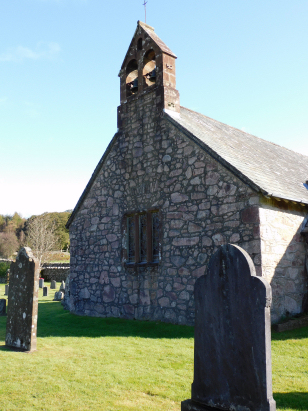
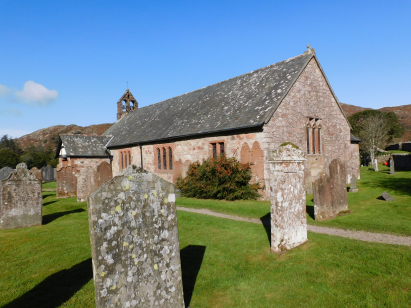
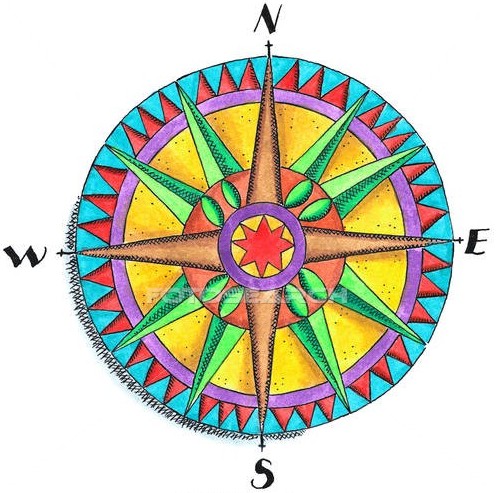
The ParishThe chapelry of Eskdale, its mother parish being St Bees, lies in the south of Cumberland roughly 7 miles east of the coast at Ravenglass. Eskdale sits a similar distance away from significant numbered roads being amongst the highest land in England in a remote valley with the Lake District National Park. The dale formed by the River Esk has a string of small settlements from Eskdale Green to Dalegarth and Boot, which holds the parish church, all formed of stone-built farms for the support of low intensity upland grazing. Within the chapelry's acreage, on the slopes of Hardknott Fell, there sits one of the most remarkable Roman Fort sites in the land, sitting at almost 300 metres above the sea Mediobogdum fort would have certainly been a harsh posting for legionnaires from the Mediterranean. Whilst there would have been extractive industry within the valley with lead the main target, the local economy was underpinned by sheep, the hardy Herdwick sheep of the Lake District being the only breed capable of extracting a living from this area. Today Eskdale makes its living from sheep but also from visitors, the Esk for its fishing and the fells for the hikers. Modern developments have come to the valley with the construction of the narrow gauge railway from Ravenglass, initially to support the mining but nowadays a heritage steam line affectionately known as L'al Ratty. Eskdale is drained southwestwards by the Esk which reaches the Irish Sea at Ravenglass. Eskdale is an upland chapelry Eskdale Green sits at 70 metres above the sea with Boot a similar height, the chapelry, however, encompasses the highest land in England with the summit of Scafell Pike (shared with Wasdale Head) reaching 977 metres. Roughly 13,000 acres of the vast St Bees parish was assigned to Eskdale and that acreage would have supported a population of around 350 parishioners. Eskdale is not mentioned in Domesday Book which has no coverage this far to the north of western England. |
 |
|
|
|
| Register No | Covering Dates | Deposited With | Register Style | Quality Standard | Comments |
| 1 |
1st June 1754 - 2nd December 1769 |
Cumbria Archives Carlisle |
Bishops' Transcripts on loose-leaf folios | Grade 2 Register - not a perfect read but with a low
likelihood of misreads |
None |
| 2 | 24th April 1770 - 18th October 1812 | Cumbria Archives - Whitehaven - Reference - YPR4/3 | Plain, unruled book containing combined Banns & Marriages | Grade 2 Register - not a perfect read but with a low likelihood of misreads | None |
| 3 | 17th April 1813 - 24th June 1837 | Cumbria Archives - Whitehaven - Reference - YPR4/5 | Standard Rose style preprinted and prenumbered Marriage register | Grade 2 Register - not a perfect read but with a low likelihood of misreads | None |
|
St
Bees St Mary & St Bega
Irton St Paul |
St
Bees St Mary & St Bega
Nether Wasdale St Michael |
|
|
Irton
St Paul
|
 |
St Bees
St Mary & St Bega
|
|
Muncaster
St Michael
|
Millom
Holy Trinity
Ulpha St John |
Millom
Holy Trinity
Ulpha St John |
1760 1770 1780 1790 1800 1810 1820 1830
Corrections to Tinstaafl Transcripts